352-804-2056



The State of Flooring
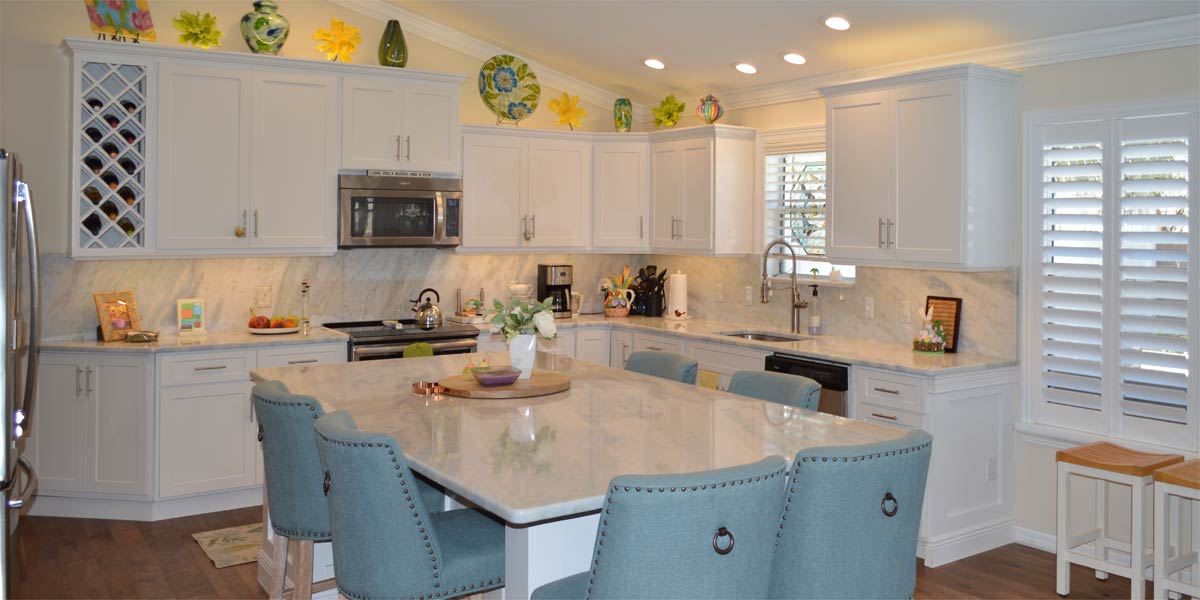
I see it every day, and for twenty-six of the twenty-seven years I’ve owned my home, it has lived with me quietly, performing without complaint and looking beautiful. It’s natural, timeless, and still one of the most respected finishes in design. I’ve never had a single issue with it, and I hope it stays with me for many years to come. It is engineered hardwood, and it is enjoying a major return to the spotlight. In our industry, the two finishes that have always held steady are engineered hardwood and tile. But for a few years, something unexpected swept in and took over. From 2019 through 2023, luxury vinyl rose to market dominance. The industry pushed it hard and presented it as nearly flawless, and it sold like ice water on a ninety-degree Florida afternoon. For a moment, it felt as if nothing else existed. The demand was intense, and the marketing made it sound practically perfect. But it wasn’t time tested. Now we find ourselves in 2026, and time has delivered its verdict. So how did luxury vinyl truly perform, and where are we heading next? It’s worth taking a closer look at the state of flooring after the whirlwind of a disruptor, right here in the heart of The Villages.
• The state of Luxury vinyl today
When luxury vinyl first swept into the market, it arrived with enormous promises. It was presented as waterproof, worry free, and practically indestructible. For a while, everyone believed it. Homeowners believed it. Builders believed it. Retailers believed it. The product moved so quickly that it felt as if the entire industry had shifted overnight.
But as the years passed and everyday use replaced marketing claims, the flaws began to surface. People started seeing cupping, heat-related movement, and inconsistent quality. Manufacturers quietly adjusted their definitions of “waterproof” and rewrote warranties to reflect the realities of Florida homes. The industry responded by altering core constructions and widening planks in an effort to stabilize the category. Today, there are some excellent luxury vinyl products available, but they are not the cheapest options on the shelf, and they require careful research. I guide my customers toward lines with heavier, denser cores in the five-to-seven-millimeter range, thicker wear layers of twenty mil or more, and heat-tolerance guidelines. I also remind people that no flooring is completely waterproof. These choices do raise the price, but the results are beautiful and convincingly realistic. Over time, I believe luxury vinyl will find its proper place in the long-term landscape of flooring. It will remain a useful option, but it will not hold the top position, and it does not add value to a home the way engineered hardwood or tile does. It will settle into its lane in the same way laminate is a part of the landscape, and the industry will settle with it. The backlash to the disruption is to look at our time tested and real products like engineered hardwood and tile. They have been the steady Eddy’s of the industry!
• Engineered Hardwood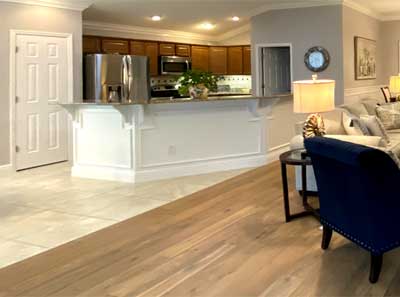
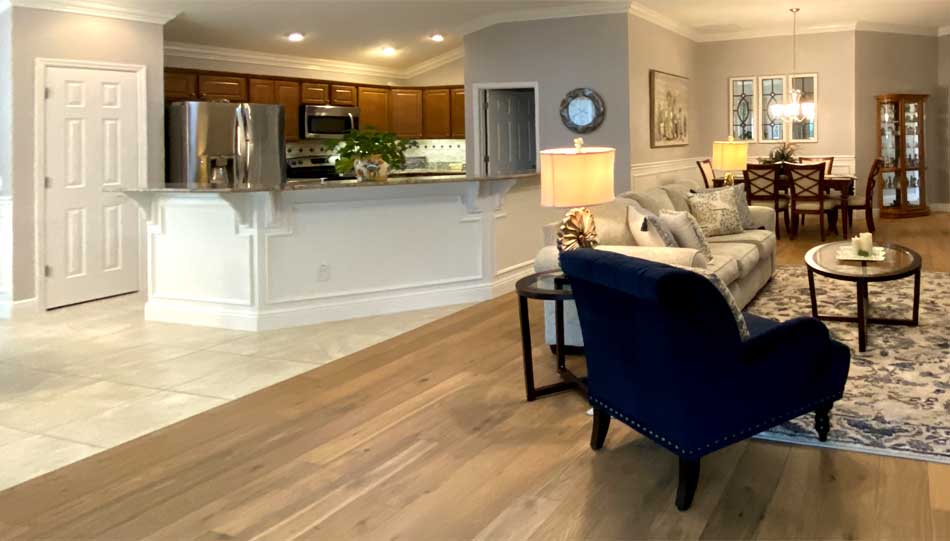
Engineered hardwood is built in layers, and that layered structure is what gives it its strength and stability. This type of wood was designed to glue to a slab. The top layer is real hardwood, the same species you would find in traditional solid wood flooring. This is the wear layer, the part you see and enjoy every day. Beneath the surface is the core. This core is made from multiple layers of wood that are arranged so the grain runs in different directions. That cross-grain pattern keeps the plank stable when temperatures and humidity change. Instead of expanding and contracting dramatically, engineered hardwood moves in a controlled and predictable way. This is why it performs so well in Florida homes where humidity swings are a constant part of life. The bottom layer is a balancing layer that keeps the plank flat and helps prevent cupping or warping. All these layers work together to create a floor that looks like solid hardwood but handles moisture, heat, and daily living with far more resilience. In simple terms, engineered hardwood is real wood on top, smart engineering underneath, and long-term stability throughout. It is typically glued directly to the concrete slab with an adhesive that also serves as a moisture barrier. Because the floor is fully adhered, it has a solid, quiet feel underfoot with none of the hollow sound that can come from floating installations. One of the everyday comforts of engineered hardwood is the warmth it brings to a room. Unlike tile, which absorbs the cool temperature of the slab, engineered wood stays pleasantly warm and inviting. It remains a top-tier finish in residential design and is still considered one of the most desirable flooring choices for adding both beauty and value to a home. Just ask any realtor. Invented in the 1960’s it is time tested and it has passed the test with flying colors.
• No threshold
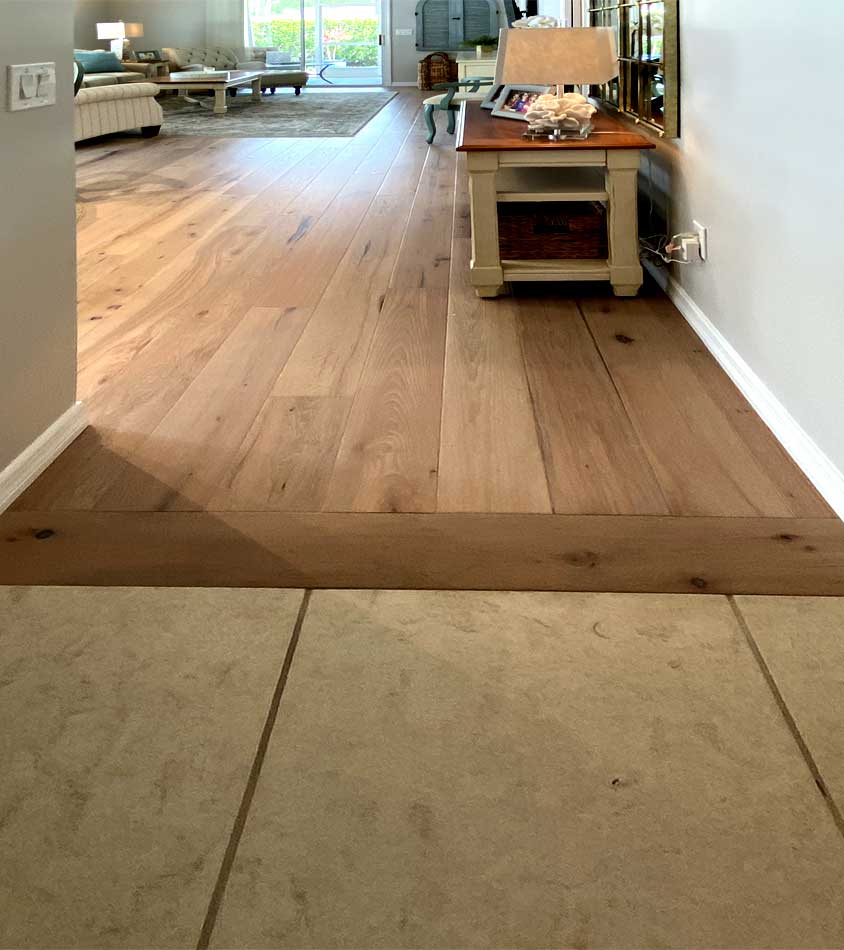
Engineered hardwood, because it is usually glued down, is the only flooring that can meet tile cleanly without creating a raised or uneven transition. The wood can be planed to match the height of the tile. Eliminating a threshold keeps the flooring smooth from room to room and reduces the chance of tripping, which makes the home feel more open and more comfortable to move through. This allows a homeowner to keep their existing tile and find a complimentary engineered hardwood to abut to the tile.
• Timeless colors
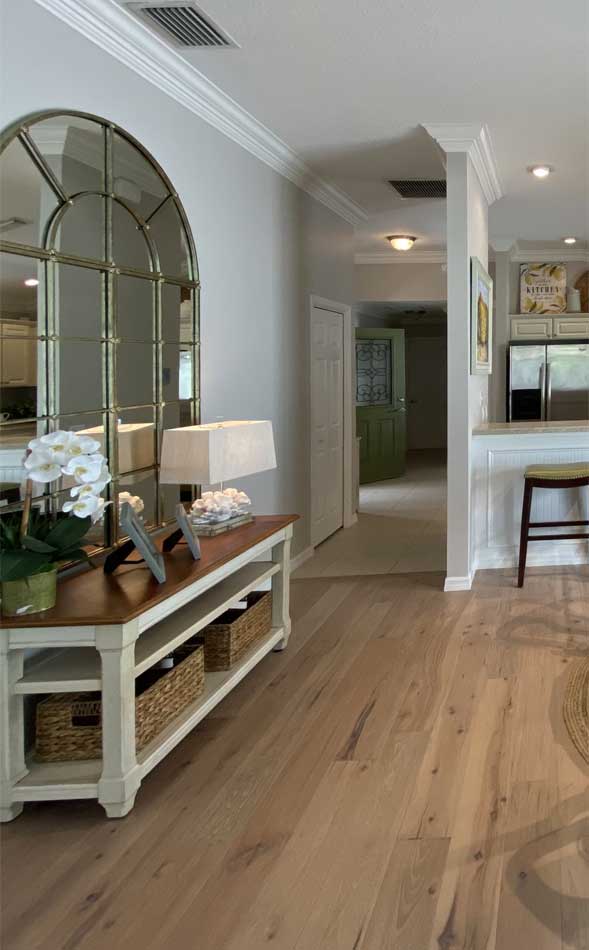
Grey flooring had a long run at the top, but it has moved into the backseat for 2026 and the years ahead. That does not mean grey floors are out of style. If you already have them, they still look great. But for people who are choosing new floors, the shift is noticeable. Warm tones are rising again, especially tans and natural browns. These colors are classics, and they stay in style no matter what trends come and go. A practical tip for homeowners is that light to medium floors do a much better job of hiding dirt, while dark floors tend to show everything.
• What about tile
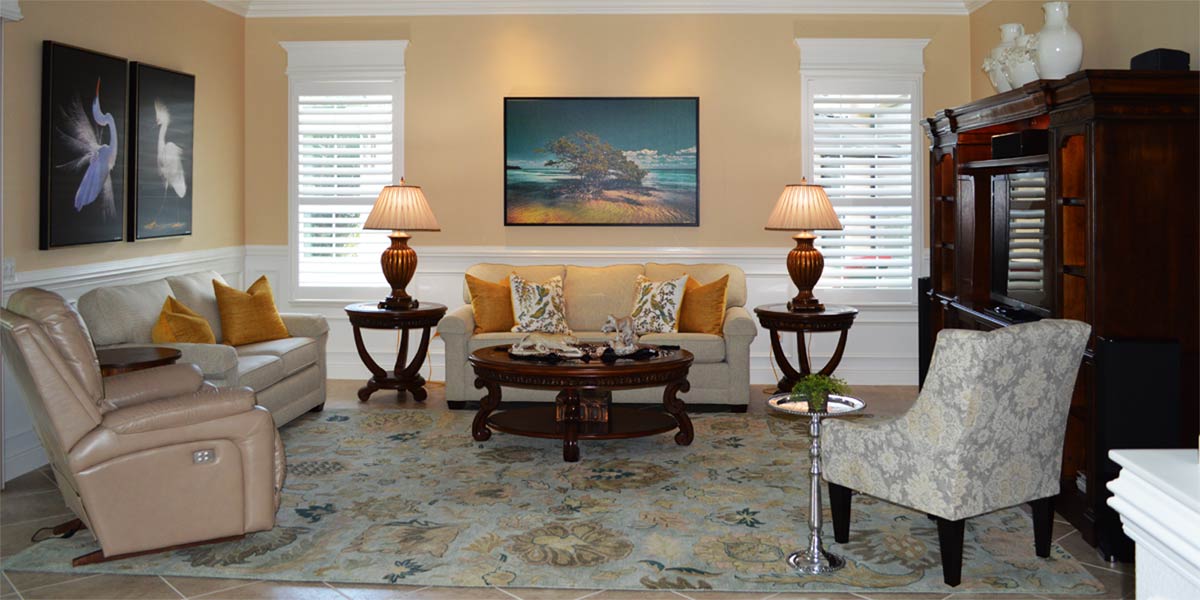
Tile is a wonderful flooring choice, and it comes in an incredible range of styles. You can choose tiles that look like wood, tiles that look like stone, or tile that simply looks like tile. It remains a top-tier design finish, right alongside hardwood, and it has a long history of standing up beautifully over time. When we install engineered hardwood throughout the main living areas, we often select a coordinating tile look-alike for the lanai. This creates a seamless visual flow from indoors to outdoors, makes the home feel larger, and gives the entire space a complete and cohesive look.
Call Ruth your full service decorator at: 352-804-2056
or Contact Us
After Images Below