352-804-2056



Lighting Illuminated
I have always been a night owl. As a child, during the school year when bedtime was set at 9:30, I rarely fell asleep before 11. The night was my time to think and dream. And when summer arrived everything shifted into its own kind of magic. We would swim until the clock struck midnight, tumble into bed still smelling of chlorine and outdoor air, and sleep until late morning. Growing up in Florida, summer was always the best season, and nighttime was even better. The world feels different after dark, as the light softens the noise settles and creativity wakes up. I’ve always preferred a sunset to a sunrise, always loved the way a house looks when outdoor lighting casts long, gentle shadows across the lawn. Good lighting at night reveals a kind of relaxed beauty that daytime rushes past. In the world of decorating, lighting is one of the most important elements we have, yet one of the most overlooked. Light doesn’t just illuminate a room; it shapes it and gives it mood. Let’s peek into a few spaces and see how thoughtful lighting can transform a home somewhere in the heart of The Villages.
• Recessed lighting
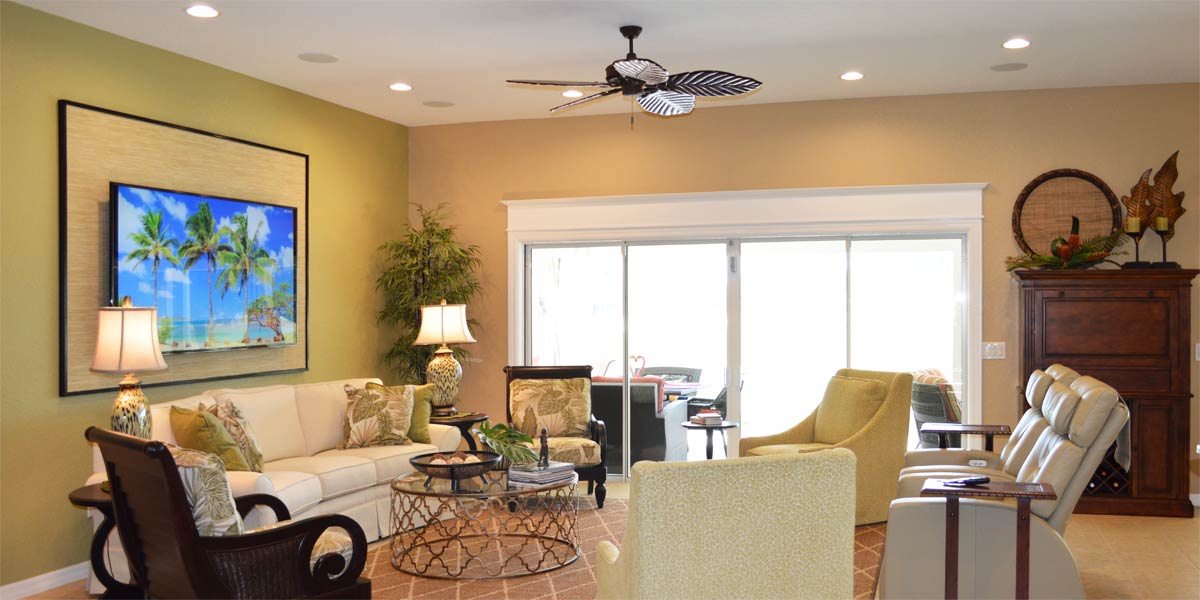
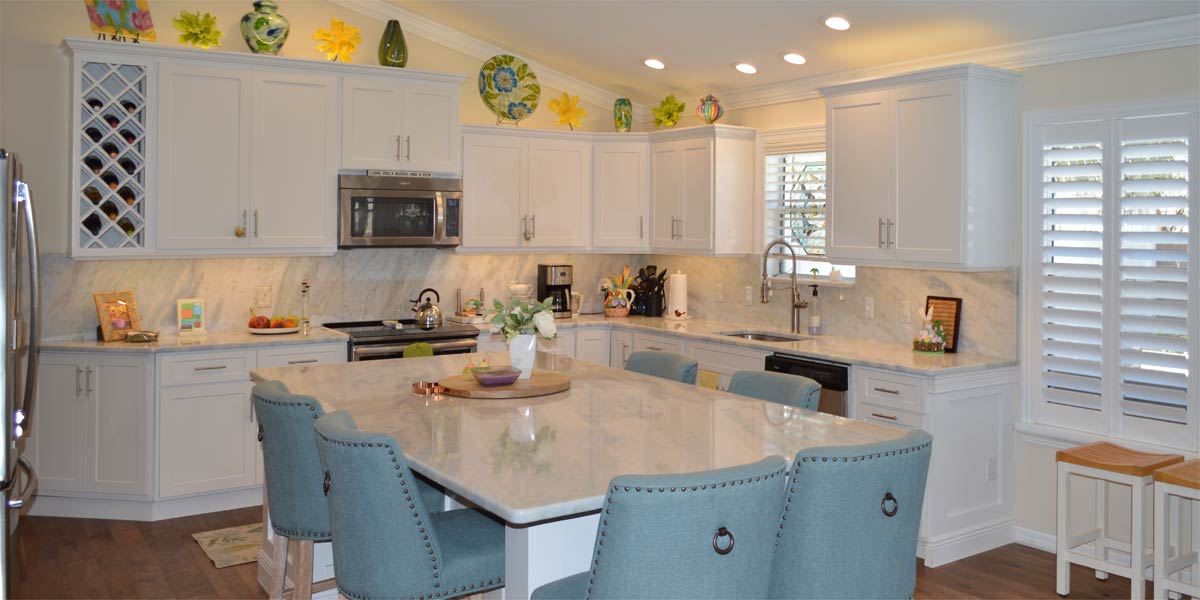
Recessed lighting is considered true general-purpose lighting, and it’s one of the best ways to bring real brightness into a room. Because you can choose the exact placement, it allows you to target specific areas that need illumination. Hot Tip: always put recessed lighting on a dimmer. It gives you full control over the mood of the room, from bright and functional during the day to soft and subtle in the evening. Some of my clients even use recessed lights with remote controls, which makes adjusting the atmosphere effortless.
• Task lighting
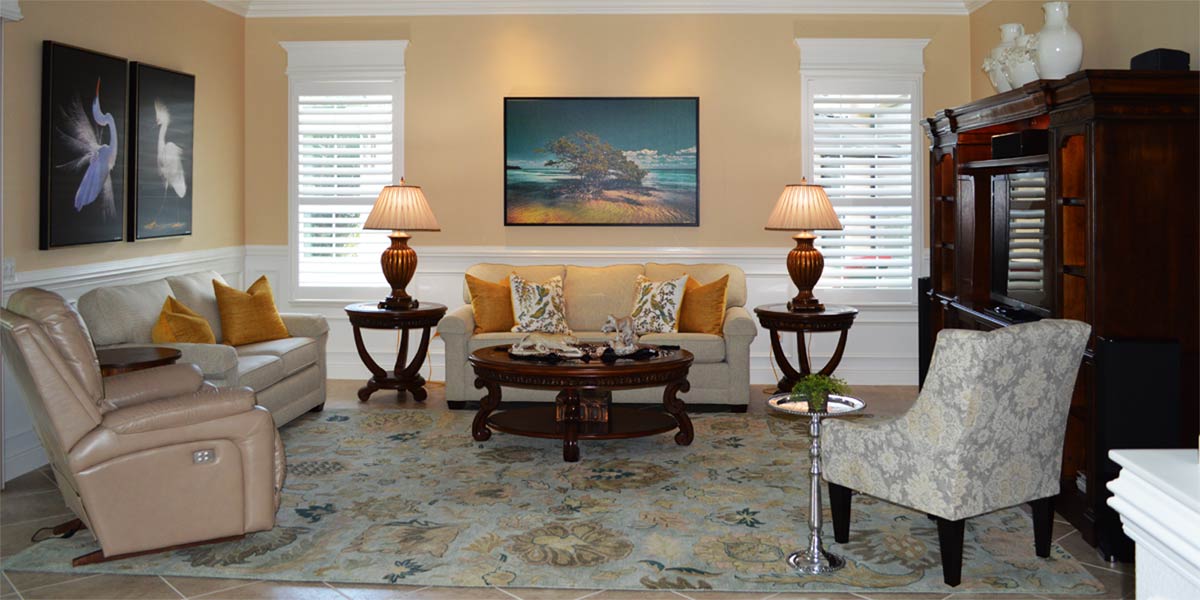
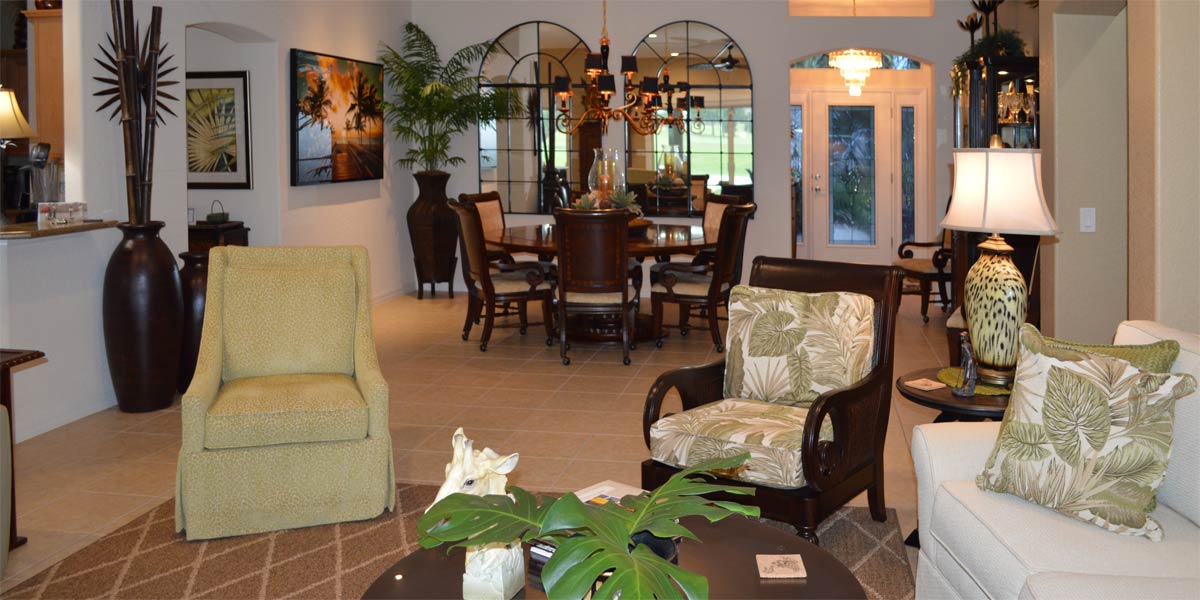
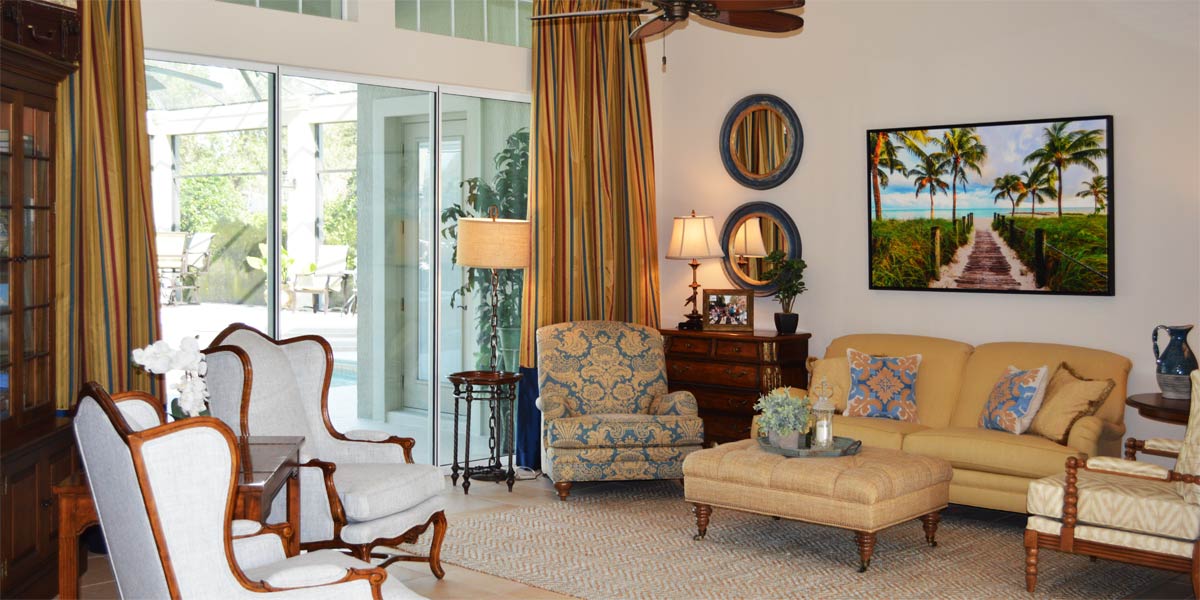
Task lighting comes from the lamps in a room, and I love using them for two reasons: they provide focused light, and they add a finishing touch that dresses the space. I usually place matching lamps on each side of the sofa, then add a third coordinating lamp somewhere else in the room to balance the glow. At night, lamp light is soft and calming, creating a quiet mood rather than the harsh, overhead brightness that can feel like the midday sun. Hot tip: Don’t be afraid to go big with your lamps and make a real statement. They are the jewelry in the room.
• Chandeliers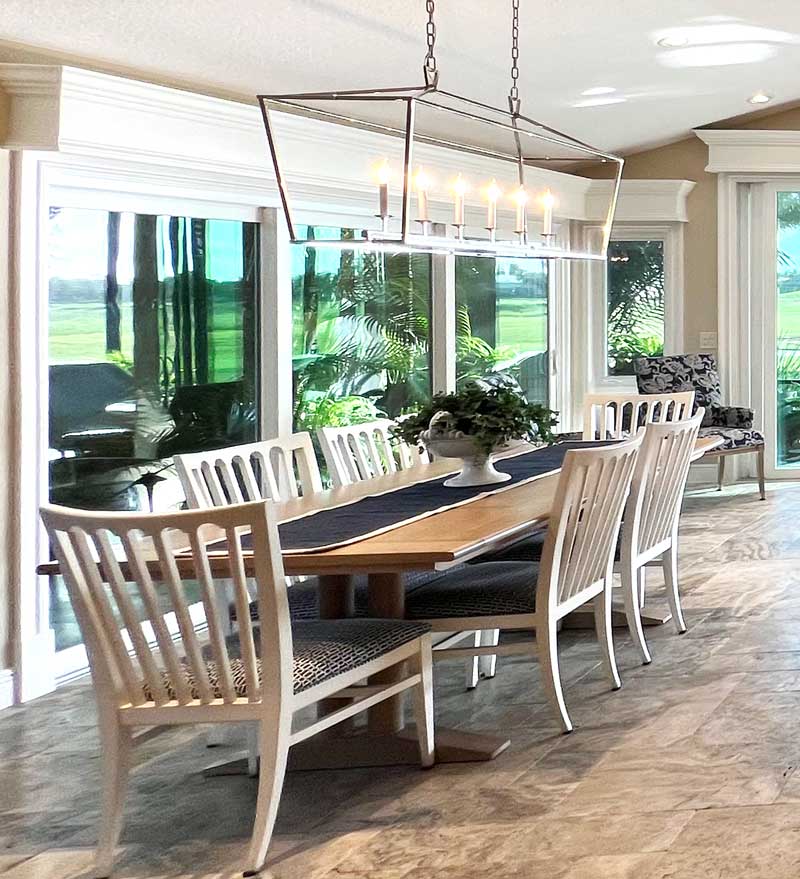
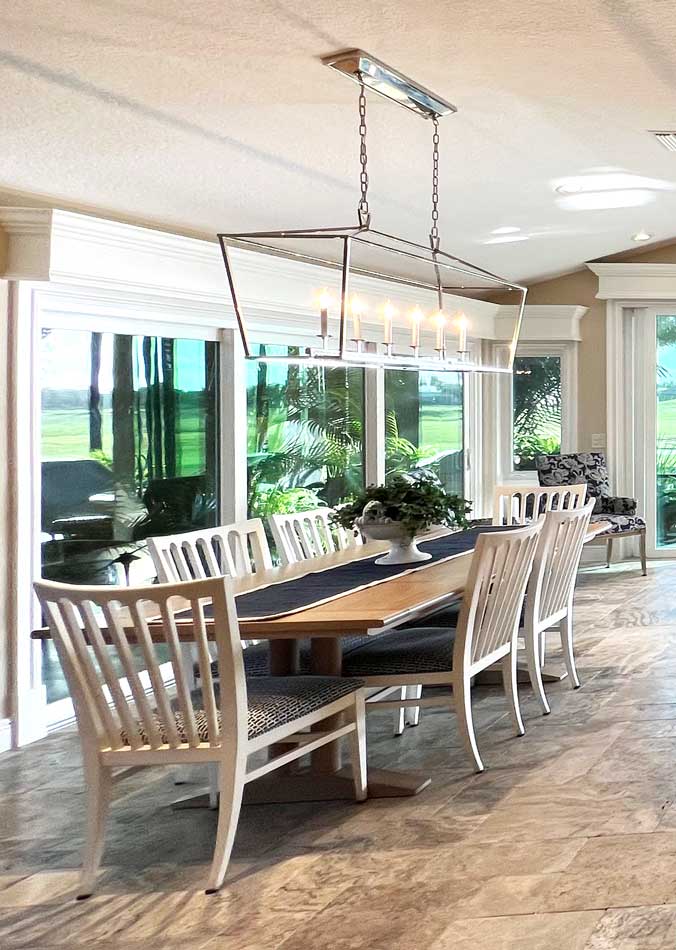
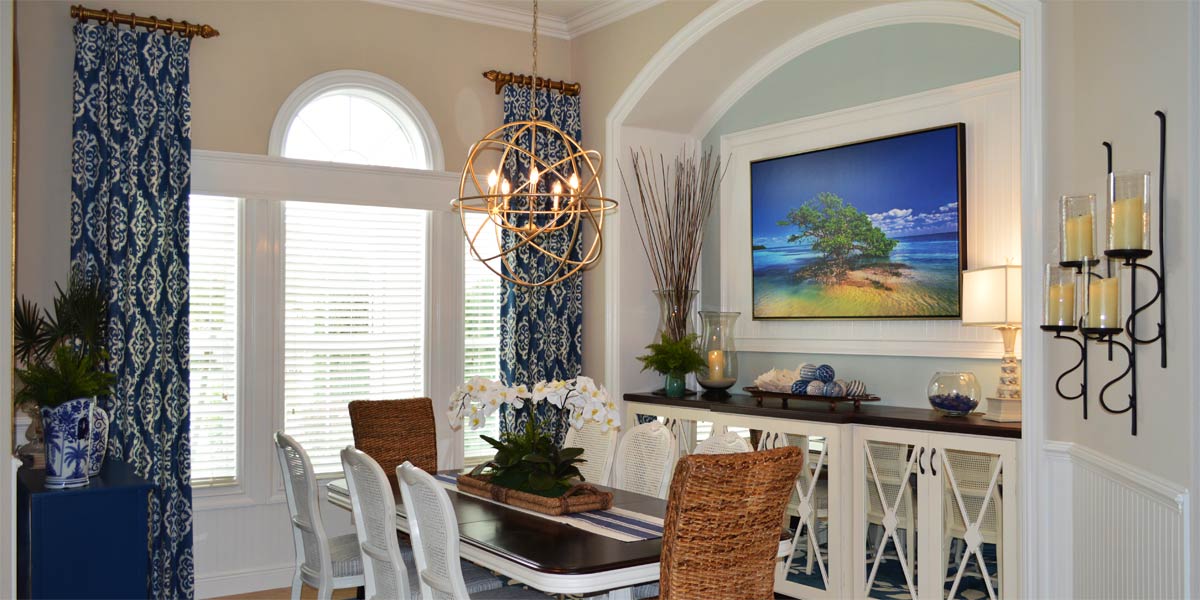
I love chandeliers that create a visual presence but do not block light. This would be an open chandelier usually that has a frame, and the lights are inside the frame. I think you can go bigger with this type of chandelier and make a real statement, but the space still looks light and airy. The lighting industry offers chandeliers for every taste and every style, from dressed up to dressed down, so there’s truly no excuse not to choose one. Think of lighting as the jewelry of the home. You don’t have to spend a fortune, but it should look as though you did.
• Hanging chandeliers
This is a question I’m asked all the time: “How high should I hang my chandelier?” Industry standards say to hang a chandelier thirty to thirty-six inches above the table surface to the bottom of the fixture if you have eight-foot ceilings. For every additional foot of ceiling height, add three inches. So, with nine-foot ceilings, the chandelier would hang thirty-three to thirty-nine inches above the table, and so on. But like every rule in design, there are exceptions. I always tell my customers to consider the size of the chandelier and the scale of the room when deciding on height. Standards are helpful guidelines, but each space is different, and sometimes the best placement is the one that simply looks and feels right.
• What Size Chandelier
“How big should the chandelier be?” is the second most common lighting question I hear. Choosing the right size isn’t an exact science, but there are a few helpful guidelines. One rule of thumb is to subtract twelve inches from the width of your table; the result is a good general diameter for the chandelier. My personal guideline makes everything simple: as long as the chandelier isn’t wider than the table, it will usually look right. A generously sized light fixture creates a strong visual impact and instantly elevates the entire room.
• Pendant Lighting
I like pendant lighting, but I always caution people when they already have chandeliers in both the dining room and the eat-in kitchen and then want to add pendants over the bar. In open home concepts, too many hanging lights in close proximity can start to feel busy. Choose carefully and make sure each fixture complements the others rather than competing with them.
• Bathroom Lighting
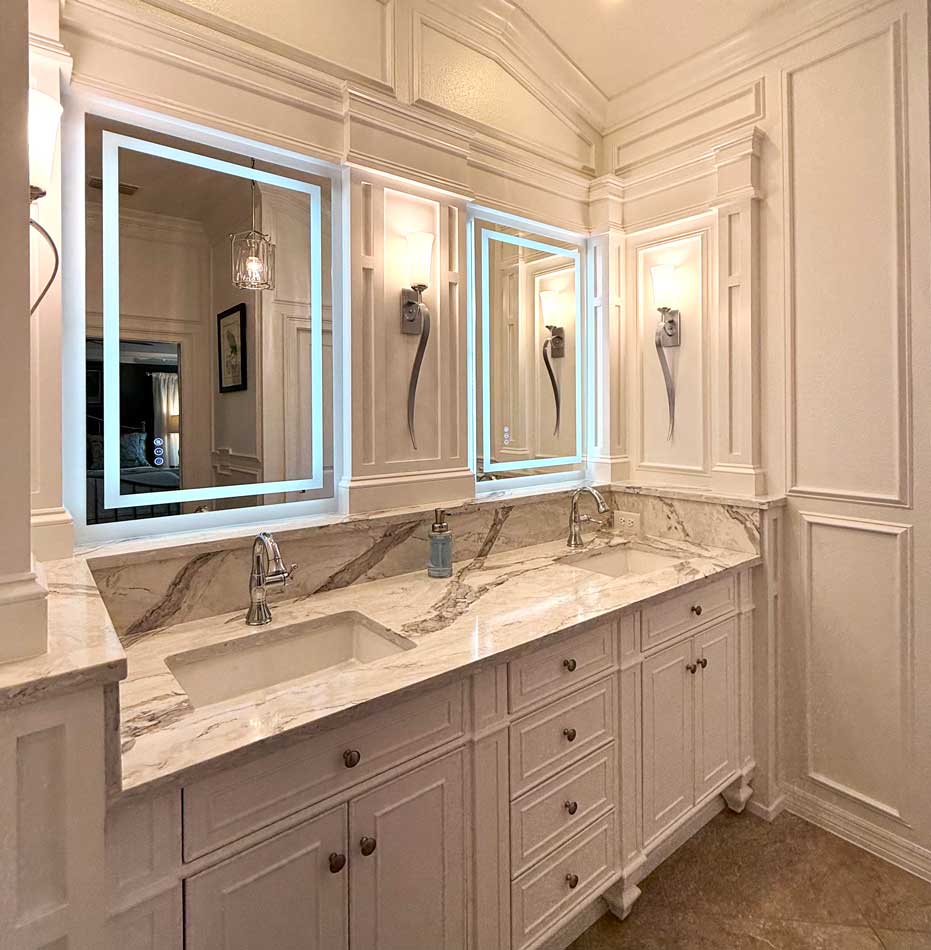
Bathroom lighting has come a long way in recent years, and I like to think of it in three layers. First is the overhead recessed lighting, which provides general illumination for the entire space. Instead of placing a single light above the mirror, I prefer to pair a lighted mirror with wall sconces. The lighted mirrors are adjustable to any color temperature you prefer, they stay fog-free, and most importantly, they shine light directly onto your face. This eliminates the harsh shadows under the eyes that overhead lighting alone can create.
Finally, the wall sconces add another layer of light right where you need it and they look beautiful, almost like jewelry for the bathroom. Together, these three elements create a space that is bright, and flattering.
• Under Cabinet Lighting in Kitchen
I consider undercabinet lighting in the kitchen a non-negotiable. It gives you clear, shadow-free light right where you’re working, which makes food prep safer and far more enjoyable. These lights should always be dimmable so they can shift from bright task lighting during the day to a soft, gentle glow at night.
• Bookcase And Built-in Lighting
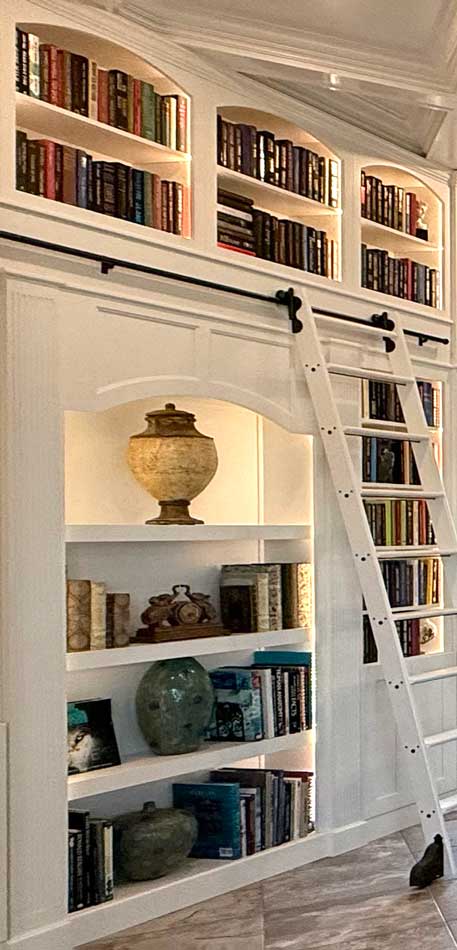
We’ve been installing a lot of built-ins, bookcases, and display cabinets lately, and the one element that truly brings them to life is lighting. Gone are the days of puck lights that cast a harsh glow from the top of the shelves. There’s a softer, more sophisticated approach now. Lighting is integrated into a slim channel along the front of the bookcase, illuminating each section evenly from the front. You see the glow, but not the source. The result is a warm, inviting light that makes the entire piece feel elevated, and inviting.
• Outdoor lighting
If you want to boost the curb appeal of your home, start with the lighting. I often see exterior fixtures that are too small or too plain to make any real impact. Be bold. Choose something larger than you think you need and watch how dramatically it elevates the look of your home. The right outdoor lighting doesn’t just illuminate the entry, it creates presence, and a welcoming glow.
Call Ruth your full service decorator at: 352-804-2056
or Contact Us
After Images Below