352-804-2056



Wicker Revival
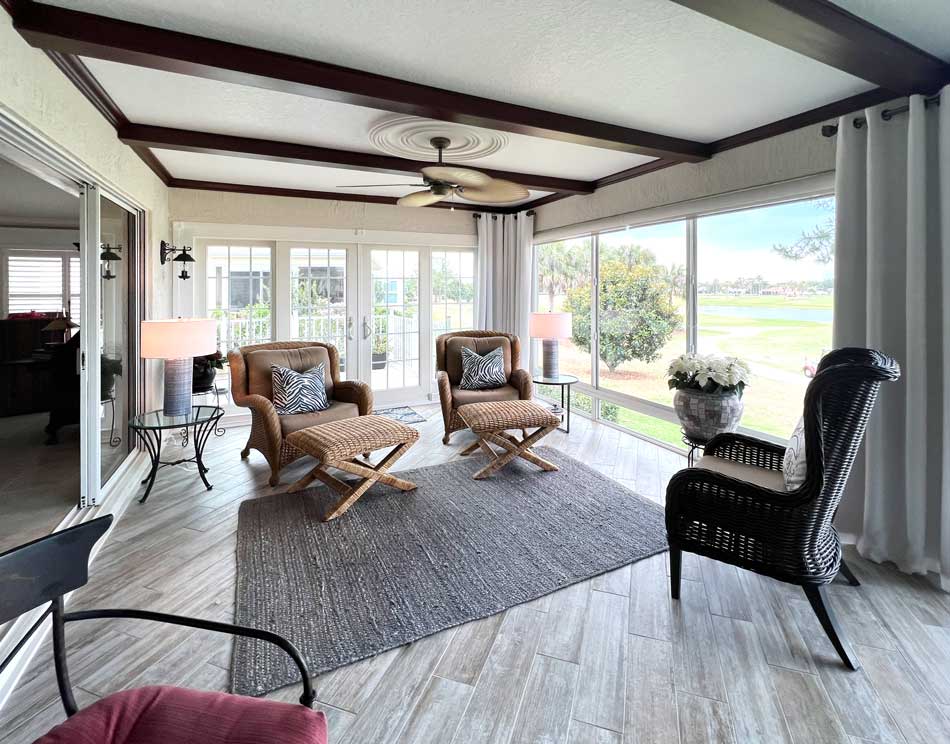
Wicker traces its roots all the way back to ancient Egypt, where woven pieces were placed in tombs alongside Pharaohs for use in the after-life. The craft began as a practical weaving tradition using whatever the land provided, then spread along early trade routes into Asia, across the West, and down through the islands. It was embraced by the British Empire, India, and the West Indies with each culture adding its own interpretation. By the Victorian era, wicker had become a design staple, its relaxed texture playing beautifully against ornate furniture and formal interiors. Across centuries and continents, wicker and rattan have proven themselves adaptable, functional, and able to slip effortlessly into any style. Let’s take a peek into the well curated lanai of a Lantana model to see how amazing timeless wicker looks against a golf course view somewhere in the heart of The Villages.
• Comfortable chairs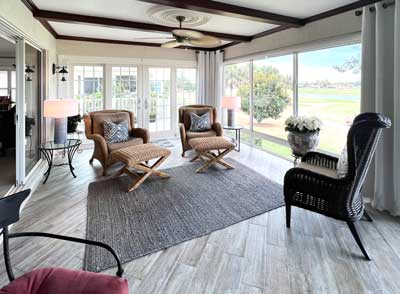
Wicker and rattan chairs can be surprisingly comfortable, and they bring an easy, relaxed look to an enclosed lanai. Because this lanai is fully enclosed, real wicker and rattan are the best choice. Plastic wicker is only necessary when a space is open to the elements. Natural materials have a richer appearance, and the texture feels better to the touch. They can be left in their natural tone or stained a deeper shade, which is why they often look more elevated than their plastic counterparts.
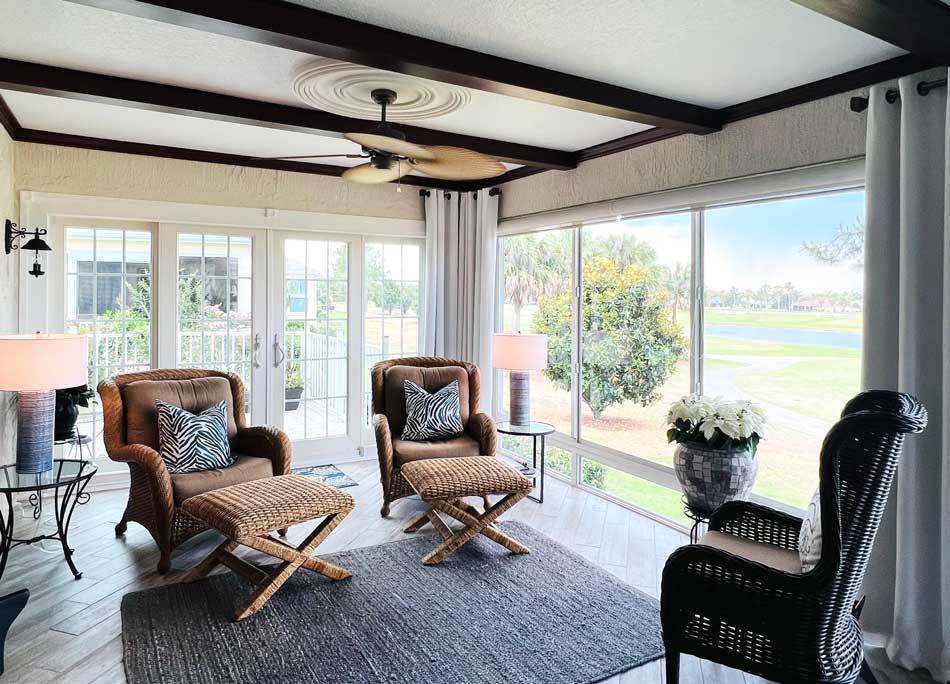
In this lanai, the homeowners placed two natural wicker chairs in their original color side by side. To complete the seating arrangement, they added a darker, chunkier wicker chair facing the pair, creating a simple and inviting conversation area. If your lanai is enclosed and air-conditioned, do not hesitate to mix wicker with soft indoor furniture, such as a traditional wingback chair. The combination works beautifully in a climate-controlled space.
• Ottomans
The two x-leg ottomans add a stylish finishing touch to the space, and they complement the chairs beautifully. The wicker weave on these stools is tight enough to feel soft under bare feet, which makes them both practical and comfortable. The open x-leg design keeps each ottoman visually light, so the seating area never feels crowded. And while wicker may look casual, it is not an inexpensive way to furnish a lanai. Quality wicker comes with a higher price tag, but the look is absolutely worth it.
• Rug
The rug is a five-by-seven jute rug dyed in a deep indigo tone. Jute is soft under bare feet and, as a natural fiber, brings an organic warmth to the space. When choosing a jute rug, it is best to look for one with a proper backing. The backing helps the rug hold its shape, since jute can stretch or warp without that support. Jute and sisal are also excellent choices if you have cats. I use both in my own home, and my cats can scratch their nails on them without causing any damage.
• Side tables
The homeowners chose metal side tables, and they look fantastic in the space. The dark iron finish plays beautifully against the natural textures, creating a subtle visual tension that draws the eye. Mixing metal with natural materials is always a smart move. The contrast adds depth, interest, and a sense of balance to any room.
• Lamps
The two lamps are indigo blue and white in a clean cylinder shape topped with white shades. A cylinder base is a smart choice on smaller side tables because it takes up less visual space while still adding presence. The color of the lamps pulls the indigo tone up to eye level, helping repeat the hue throughout the lanai and creating a sense of cohesion in the room.
• Pillows
The homeowner chose two pillows in an indigo and white zebra print, and they bring a bold, stylish layer to the seating area. The pattern adds just the right touch of animal print, and the color helps introduce even more indigo into the space, reinforcing the palette in a simple, effective way.
• Ceiling Beams
The dark beams are a beautiful addition to the ceiling. The wood has a rich presence without feeling heavy, especially in a room this open and filled with natural light. In a bright space, a touch of dark wood adds character rather than weight. If you are considering adding dark beams of your own, just be sure the room has plenty of natural light to keep the look balanced and inviting.
• Curtains
The most overlooked element on a lanai is often the use of curtains. They add softness, movement, and a sense of layering that instantly elevates the space. In this home, the owners added white curtains to the corners and placed a single panel in the center to cover the column between the windows. The white fabric keeps the look bright and clean without distracting from the beautiful view. The rods are short sections that meet neatly in the corners and extend just wide enough to cover the middle column. We hung the curtains high, just under the beams, to draw the eye upward and emphasize the height of the room. The result is a look that frames the view, softens the architecture, and brings a finished feel to the lanai.
• Blinds
The homeowners installed sun-diffusing blinds, which help soften and break up the direct light during the brightest part of the day. Once the sun shifts and the glare eases, the blinds can be raised again to open the view. Choosing motorized blinds was one of the smartest decisions they made. With a single push of a button, the shade goes up, and with another, it comes back down. I always encourage people to think about how often they will use a product and to invest in motorization where it truly matters. You do not need every window to be motorized, but it is worth doing on the windows
that are hardest to reach or have the widest span of blinds.
Call Ruth your full service decorator at: 352-804-2056
or Contact Us
After Images Below