352-804-2056



Villainized Design
The cool air conditioning rushed past me as we stepped into one of the newest shows at Hollywood Studios. It always feels wonderful to slip inside on a hot August day at Disney, and it gave me a welcome chance to rest my leg. This was my first big outing since my surgery, and it was very exciting indeed. The lights dimmed and the woeful magic mirror began its tale. “Magic mirror on the wall, who is the most misunderstood of all?” Cruella Devil asked the mirror first. The show explored the lives of Disney villains as they pleaded their case, hoping the mirror would judge who had been misinterpreted, mislabeled, or unfairly accused over time. It was a fantastic blend of live performers and Disney magic that held the audience and me completely spellbound. When the show ended and we stepped back into the heat, my mind wandered to one of the most villainized items in the world of design. The mirror itself remains one of the most underrated and misunderstood elements in homes today. Let us explore the world of mirrors and clear away a few misconceptions somewhere in the heart of The Villages.
• Mirrors as light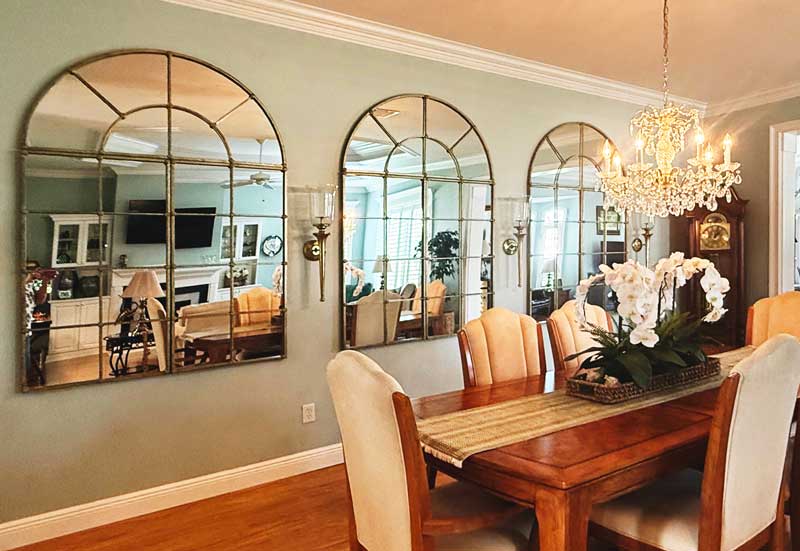
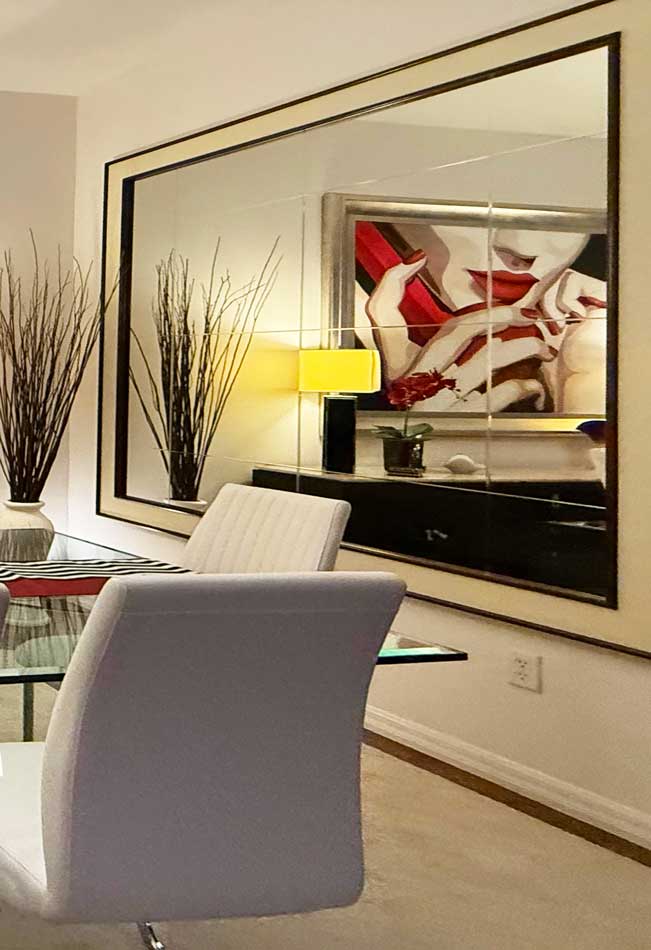
People often say they avoid using mirrors because they worry it will make them seem vain. In reality, mirrors are one of the most effective tools for reflecting light and opening up a space. When a mirror is placed reflecting light or a view, you rarely look at yourself in it. Instead, you notice the way it brightens the room and expands the view.
Think of the Hall of Mirrors at Versailles. That grand space was created to replace an awkward terrace and to make a powerful statement celebrating the achievements of France. The mirrors were not about personal reflection. They were about light, scale, and the feeling of grandeur. There is no reason to be afraid of mirrors or to limit them. They offer extraordinary benefits in design, from amplifying natural light to creating a sense of depth and elegance.
• Foyer
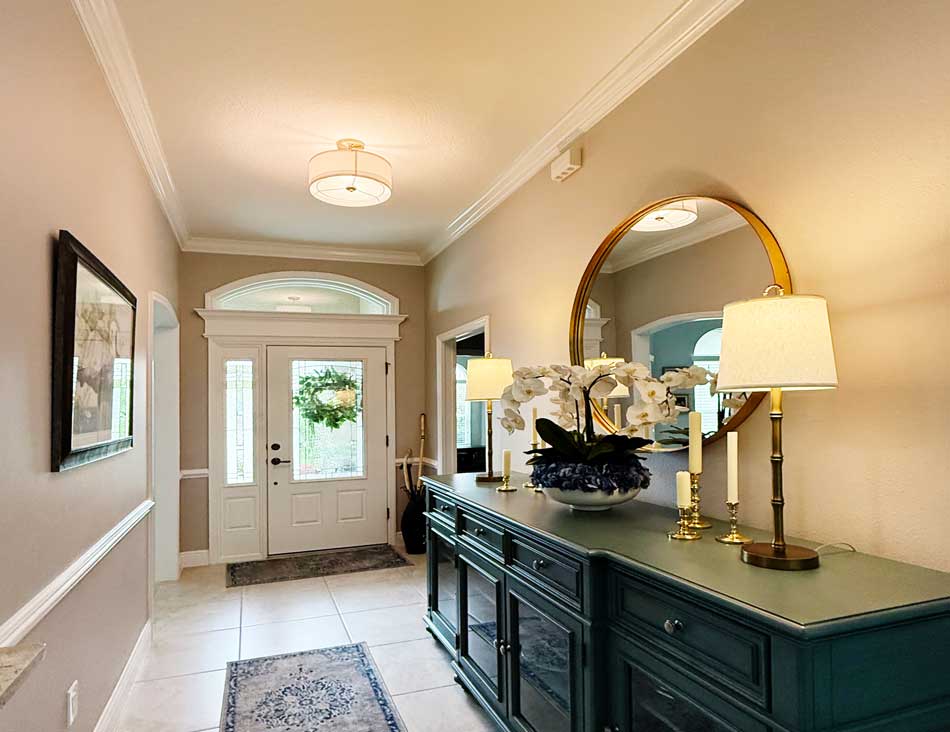
Most foyers and entryways have two walls, and because guests move through these spaces quickly, they rarely stop to appreciate a special piece of art. I prefer to save the standout artwork for rooms where it will be noticed and enjoyed. In the foyer, a mirror above the entry table works beautifully. It reflects light, expands the space, and creates a welcoming moment without demanding attention. On the second wall, or on the wall opposite the larger wall with the mirror, I like to hang artwork that is pleasant but not a favorite piece. Since guests are entering and exiting, they will not linger long enough to take it in, so this is a good place for art that supports the space without needing to be the star.
• Never Too Big
A mirror cannot be too large because its purpose is to reflect light. As long as there is enough wall to hold it, the scale works. If the frame begins to spill beyond the edges of the wall, that simply means the mirror belongs on a larger wall. The mirror itself is not too big. It is only too big for that particular spot.
• Placement
On a sunny day, take a moment to look at your walls and notice which areas are naturally washed with light. These are often the walls opposite windows, and they make ideal locations for mirrors. When a mirror is placed where sunlight already falls, it amplifies that brightness and helps carry it deeper into the room.
• Mirrors Interrupted
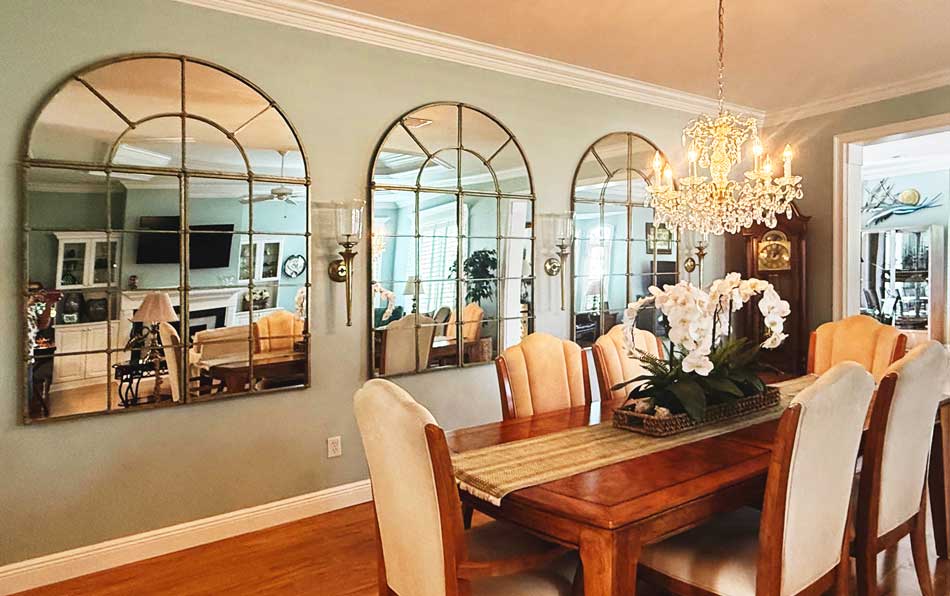
Remember that a mirror’s main job is to catch and multiply light. Anything placed in front of it gains presence. A plant or floral arrangement instantly looks fuller because the reflection doubles its shape and color. Candles become especially beautiful. When their flames flicker against the glass, the glow appears larger and brighter, creating a warm and inviting atmosphere. Mirrors do more than reflect objects. They enhance the feeling of abundance and light in a room, which is why they are such powerful design tools.
• Mirrors As Art
Let mirrors serve double duty. Statement mirrors elevate a room while still doing the practical work of reflecting light, which makes them both functional and memorable. A mirror framed in hammered metal or one with a large wooden boarder can become a focal point in the room.
• Never Too Many
Some clients worry about having too many mirrors, but in homes with generous windows and plenty of natural light, mirrors are essential. They catch the light and carry it farther into the room, which allows the artwork to stand out with even more presence. When the light is balanced, the art becomes a vibrant punctuation in the space.
• Low Cost
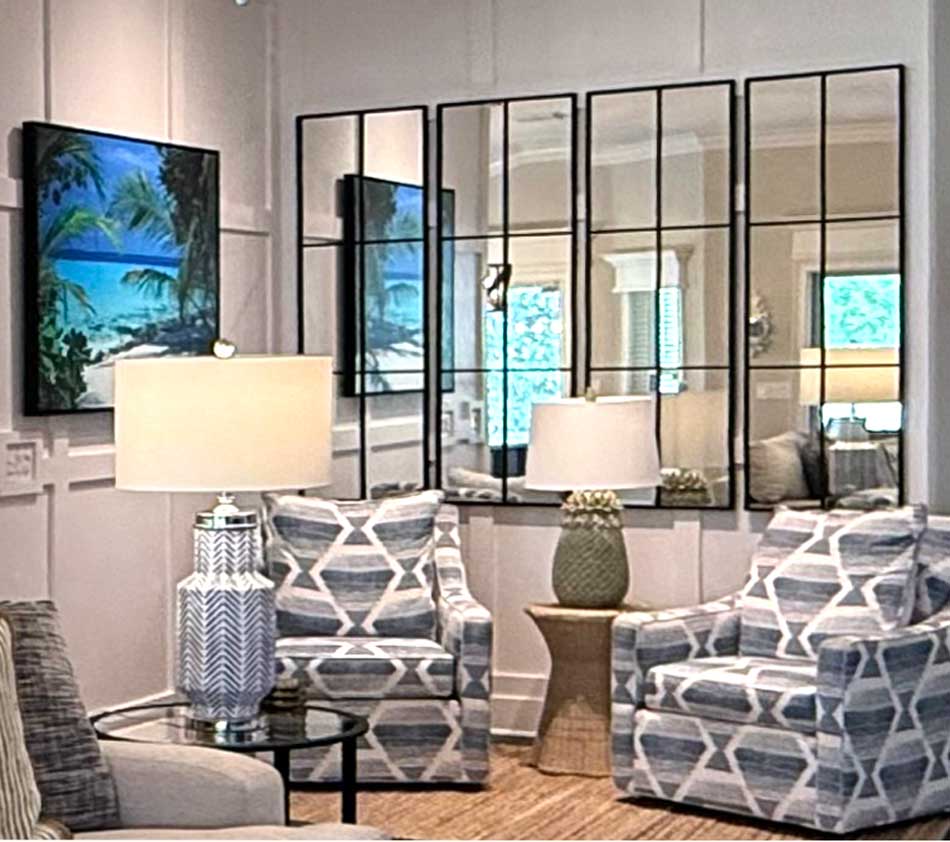
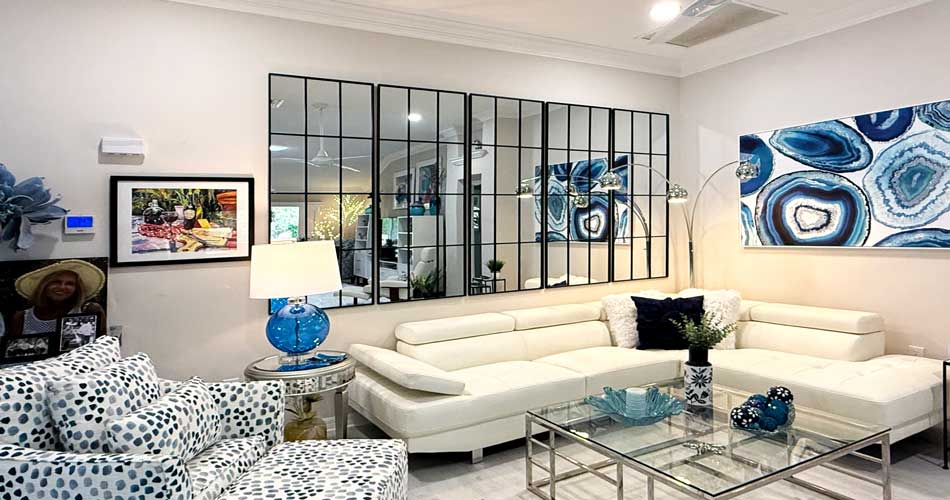
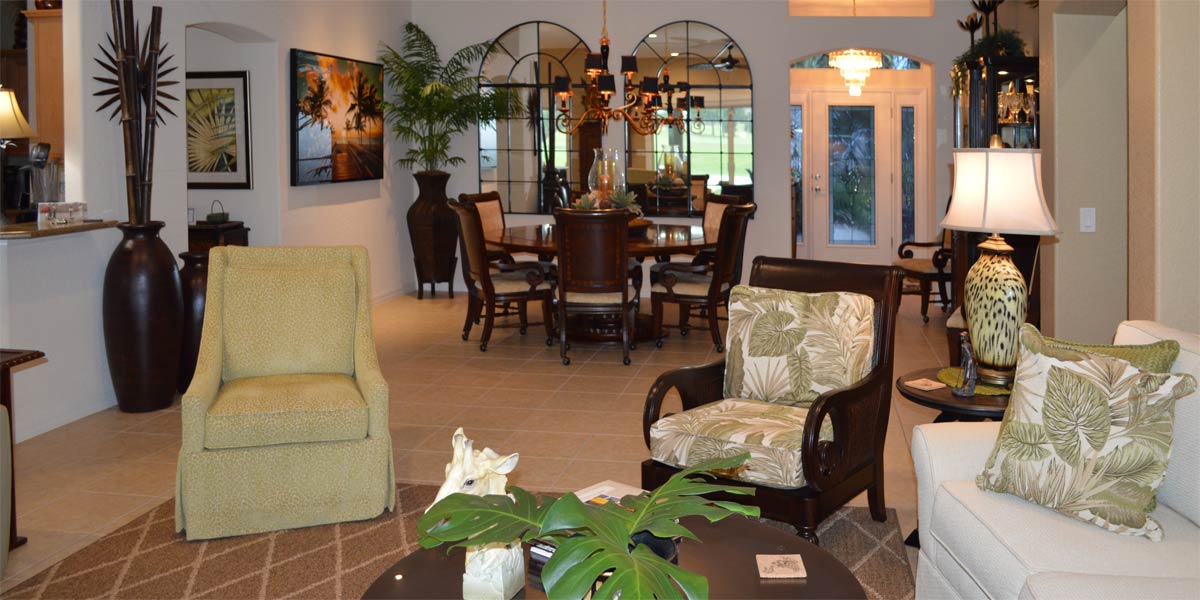
Mirrors can be low cost but with big visual returns. They can be purchased online or at discount home stores for very little money and you can repeat them to increase the size. A very popular mirror is a loft mirror. These mirrors are designed to look like a window in an industrial loft building, and they usually have thin black frames that create window panels. If you hang them closely together it creates a huge visual statement that is beautiful especially when reflecting light or a view.
Call Ruth your full service decorator at: 352-804-2056
or Contact Us
After Images Below